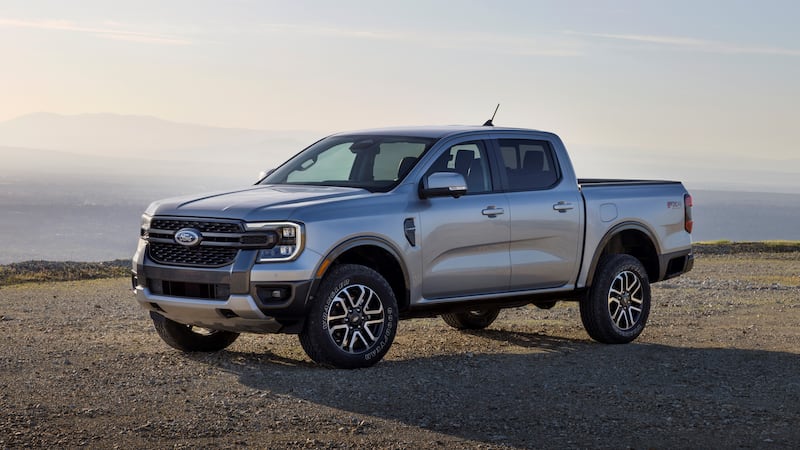
As one of the most competitive categories in the automotive world, the midsize pickup segment continues to find ways to impress. In this category, capability alone won’t cut it.
That’s good news for the 2026 Ford Ranger SuperCrew XLT. I recently tested the mid-size pickup for a week and was impressed with the strong mix of capability, modern tech, and everyday practicality.
Positioned between compact lifestyle trucks and full-size workhorses, the Ranger attempts to satisfy buyers who want something maneuverable enough for daily commuting, yet rugged enough for towing, hauling and weekend adventures. This Ranger can check all the boxes.
My first impressions of the Ranger SuperCrew XLT made it obvious that Ford has put considerable effort into making this truck feel more refined and versatile than earlier generations. In this competitive segment, that’s essential.
My tester featured Ford’s optional 2.7-liter EcoBoost V6 engine, a $2,295 upgrade over the standard powertrain. Producing 270 horsepower, the turbocharged engine delivers strong acceleration and impressive low-end torque. Whether merging onto the highway or climbing graded inclines, the Ranger never felt strained. Power delivery was smooth and responsive, and the engine pairs nicely with Ford’s 10-speed automatic transmission.
The transmission generally shifts cleanly and efficiently, though there are occasional moments where it seems overly eager to hunt for gears at lower speeds. It is not a deal-breaker, but I did notice some hesitation during stop-and-go traffic or when transitioning between city and highway driving.
Fuel economy remains respectable considering the truck’s four-wheel-drive configuration and V6 performance. EPA estimates are 18 mpg city, 23 mpg highway, and 20 mpg combined. Those numbers are competitive for the segment, especially for buyers who may actually need towing/hauling capability.
Styling is another area where the Ranger succeeds. The Ranger is handsome, with a mature appearance without becoming overly aggressive or flashy. The front fascia exudes confidence, highlighted by a wide grille and modern lighting elements. It looks equally comfortable parked at a suburban grocery store or sitting at a muddy construction site.
This particular tester added several practical upgrades, including the Advanced Tow Package ($1,845), black running boards ($750), integrated box side step ($215) and ToughBed spray-in bedliner ($525). Together, these additions enhance the Ranger’s functionality without dramatically altering its appearance.
The integrated box side step deserves special mention because it genuinely improves access to the bed. It may seem like a minor feature, but climbing into modern pickup beds can become tiresome, especially when loading tools or cargo repeatedly throughout the day.
Inside, the Ranger’s cabin strikes a nice balance between utility and comfort. Ford has elevated the materials and overall layout compared to older Rangers, giving the truck a more upscale feel than many buyers may expect from a midsize pickup.
I’d characterize the dashboard design as clean and straightforward, with large controls that are easy to operate while driving. Ranger’s soft-touch surfaces appear in several key areas, while durable plastics remain where they make practical sense.
I found the front seats to be comfortable for longer drives, and the outward visibility is excellent. The SuperCrew configuration also offers generous rear-seat room for a midsize truck. Adult passengers should find sufficient legroom for everyday travel, and the rear bench folds down to reveal convenient hidden storage compartments. That additional storage space becomes especially useful for keeping valuables, tools or supplies secure and out of sight.
One noticeable improvement over previous models is the tech integration. I found the infotainment system to be intuitive, with crisp graphics and quick response times. Smartphone connectivity is straightforward, and physical buttons remain available for several commonly used functions, something many of us still appreciate.
Towing capability remains one of the Ranger’s strong points, particularly with the Advanced Tow Package equipped. Buyers planning to tow boats, campers or utility trailers should appreciate the added confidence provided by the Ranger’s towing technology and stable chassis behavior.
Safety technology is another strength. Ford offers a robust suite of driver-assistance systems that help make the Ranger feel modern and secure. Features such as blind-spot monitoring, lane-keeping assistance, forward collision warning and automatic emergency braking contribute to a reassuring driving experience.
Ford backs the Ranger with a 5-year/60,000-mile powertrain warranty and 5-year/60,000-mile roadside assistance coverage, adding additional peace of mind for owners who intend to keep the truck long-term.
Still, the Ranger is not without some shortcomings, including road noise in the cabin and some budget materials that can cheapen the experience a bit.
Pricing can also climb quickly once options are added. The Ranger SuperCrew XLT starts at $39,375, but this tester reached a final sticker price of $49,600, including optional equipment and destination charges. That places it close to some entry-level full-size trucks, which may get some potential customers’ attention.
Overall, I think the 2026 Ford Ranger SuperCrew XLT 4x4 succeeds by delivering a thoughtful blend of capability, comfort and everyday usability. It feels refined enough for family duty while remaining tough enough for demanding work tasks.
• John Stein is a freelance journalist based in Chicago. He has more than 25 years of experience driving, testing and writing about the automotive industry, its latest innovations and vehicle performance.