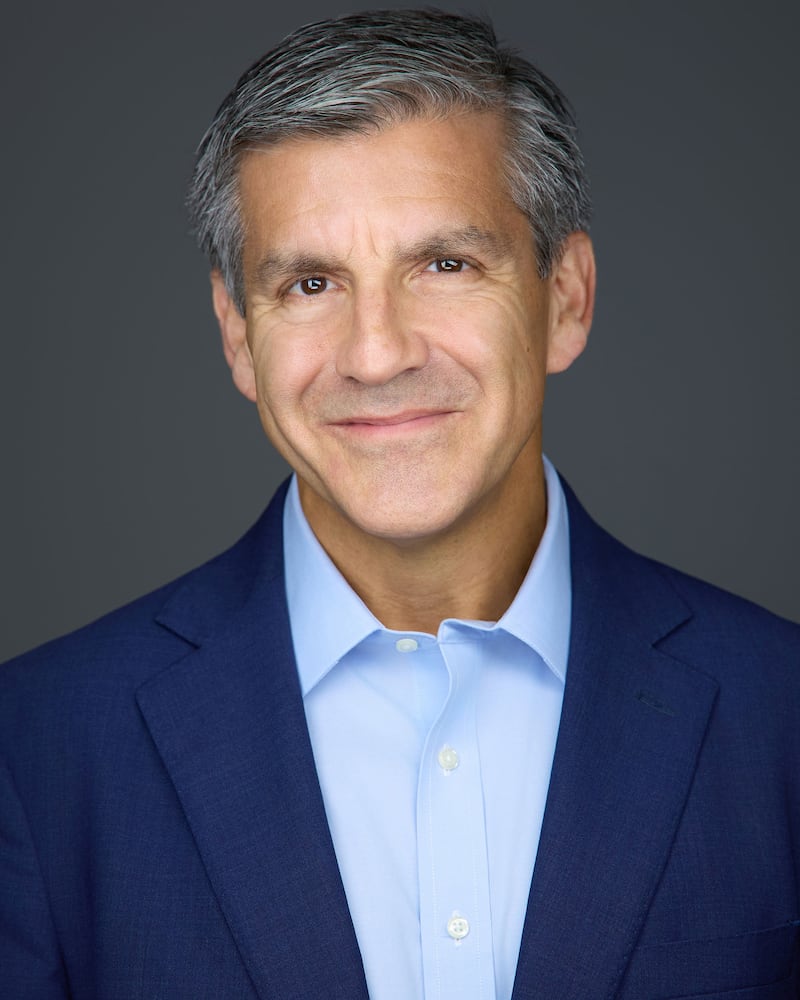
Name: Ted Dabrowski
What office are you seeking: Governor of Illinois
What is your political party? Republican
What is your current age? 62
Occupation and employer: Former President of Wirepoints
What offices, if any, have you previously held? None.
City: Wilmette
Campaign website: https://tedforillinois.com/
Education: University of Chicago. Harris School for Public Policy. Masters. 2007-2009, The Wharton School. MBA in Finance, International Management. 1987-1989, Georgia Institute of Technology. Industrial Management. 1981-1986
Community involvement: New Trier Neighbors
Marital status/Immediate family: Married for 30 years. Father of four children.
What is your top priority for Illinois if elected governor?
My top priority is to restore confidence to business owners, parents, the financial community, and workers of all kinds. To make sure Illinois’ government respects hard work, protects children, and returns the state to a land of opportunity.
How do you plan to balance the needs of Chicago, the suburbs, and rural communities?
I reject the premise that there are big differences between Illinois’ big three geographies. The government’s core responsibility to provide safety, infrastructure and education are the same everywhere. That said, state resources are highly skewed to Chicago, especially regarding education funding. Chicago’s results across crime, education, jobs and growth show those resources aren’t used effectively. Resources should be distributed more fairly with a base amount required to operate and then based on population and cost of living.
Are you committing to serve a full term if elected?
Yes.
Do you support term limits for governors, and if so, what limits?
Normally I’d prefer that voters decide to push out their Governors. But Illinois has become so corrupted that I support a limit of two terms.
How will you address the state’s long-term pension obligations?
Warren Buffett once remarked he wouldn’t invest in high-debt states like Illinois because the growing taxes to cover those pension debts would target his companies for 30 to 40 years.
The first step to solving the pension crisis, then, is to stop digging the hole deeper. All new government hires must be enrolled into a defined contribution 401K-style plan, one modeled after the retirement option currently offered to Illinois public university employees. Government workers should control their own retirements – get irresponsible politicians out of the process.
Moving to 401ks won’t reduce the nation’s-worst debt load that Illinoisans are burdened with, but it will stop new debts from accruing and demonstrate to the rest of the country that Illinois is finally taking steps to address its pension crisis.
Double-dipping, pension spiking, unlimited unused sick leave accumulation – practices that no private sector Illinoisan has access to, but has to pay for – must also be ended
More significant pension reform requires a state constitutional amendment. Lawmakers, the unions and taxpayers must come to the table to address any potential reforms.
How should Illinois approach economic development and job creation to address out-migration and population decline?
It’s true that Illinois has suffered the nation’s 4th-worst private-sector job growth, the 6th-worst GDP growth and the 7th-worst wage growth since Gov. Pritzker took office. Illinois’ high costs and economic stagnation have driven a net of more than 400,000 residents out of Illinois since 2020 alone. Illinois must enact the polar opposites of all of Pritzker’s economic policies if we are to become a jobs and people magnet.
Illinois businesses need relief from the nation’s 3rd-highest corporate income tax and 7th-highest commercial property taxes. A property tax cap, an income tax cut, and reforms to major expenses like workers compensation can provide that relief. And we must slash Illinois’ web of 280,000 regulations and rules – the nation’s 4th-most – that burden small businesses and entrepreneurs.
We must repeal Illinois’ “zero emissions” energy policy and return to a sensible balance of fossil fuels, nuclear and renewable sources that will bring energy costs down.
Finally, we must stop the creation of new pension debts. I will call for 401K-style retirement plans for all new government workers which will halt the creation of new debt and help kickstart business confidence in Illinois.
What reforms would you implement to control homeowners’ insurance costs?
High replacement costs are the primary driver of high insurance costs, making this issue similar to housing affordability. The state, and especially Chicago, have made the construction business a nightmare. Rules and regulations are strangling builders and housing providers and have driven many out of state. That includes myriad burdens on employers, counterproductive “affordable housing” programs like those in Chicago and high energy costs – which drive up prices on most everything.
As governor I would fight to remove the above barriers to replacement. The more government gets out of the way, the lower insurance costs will become.
What is your stance on the SAFE-T Act and what changes, if any, would you make?
Criminals are prioritized over victims under the Democratic Party’s failed policies. Gov. Pritzker’s SAFE-T Act allows repeat felons to roam the streets freely while awaiting trial. As governor I would fight to repeal the SAFE-T Act in its entirety.
Do you think the federal government should be allowed to activate the National Guard to combat crime in Illinois?
Yes. I believe President Trump has the authority to bring in the National Guard to enforce federal laws and protect federal property.
Gov. Pritzker should be cooperating with President Trump’s attempts to reduce crime and deport criminal illegals from the state. Unfortunately, Pritzker instead has attempted to block the president’s efforts and has engaged in unacceptable, incendiary rhetoric. In fact, the governor has gone too far by fomenting violence against federal law enforcement officers.
Under my governorship, intervention by President Trump would be unnecessary as I would work cooperatively with federal law enforcement to remove criminal illegal immigrants from our streets and our jails, restoring the law and order Illinoisans deserve.
What is your plan for improving public education? Should it continue to be funded primarily by property taxes?
Illinois public education is a broken system. Overall, just a third of Illinois children perform reading and math at grade level. We’re spending more than $24,000 per student – the most in the Midwest – all for dismal results.
As governor, I will work to restore student literacy and numeracy in public education and fight for a statewide universal school choice program. We should benchmark our school spending against other states that achieve better results with far lower spending.
Property taxes should remain the primary source of education funding because, as painful as they are, they allow local residents to have some say over policies of their local district. Giving politicians in Springfield more power over K-12 education is the last thing we need.
What role should the state play in housing affordability and development?
None. Other than basic safety and environmental standards, the state should stay out of housing and let the market decide prices and supply.
What actions would you take to improve healthcare access statewide?
Healthcare costs are driven primarily by federal policy, which is a disastrous failure. Both parties have failed, with Democrats intent only on throwing more money into Obamacare subsidies and Republicans tinkering around the edges. I will advocate for federal changes that replicate the best elements from other nation’s systems, many of which deliver superior care at far less cost per patient than here. State-level actions that can be taken include expanded telecare for less serious issues and a crackdown on fraud, more and more of which is now being exposed.
Should Illinois expand use of nuclear energy, including the Byron plant? How should the state balance nuclear, renewable, and traditional energy sources?
Yes, Illinois should move towards expanding nuclear capacity. Illinois recently, belatedly ended its total ban on new nuclear plants, but has shown no serious effort to get them built. That requires streamlining approvals and working positively with the Trump Administration to overcome any federal barriers to construction.
Should local governments have more authority over solar farm development? How do you balance renewable energy goals with local control?
Yes, local governments should have authority over the development of renewable projects that will impact their communities. As governor, I would fight to repeal the state’s arbitrary renewable energy goals, making “balance” with local control moot.
How do you see the role of the governor in working with or opposing the Trump administration? How do you balance state autonomy with federal policies on issues like abortion rights and immigration enforcement?
My litmus test for Trump policies will be whether they benefit Illinois, not politics or grandstanding. I will engage Trump and all federal agencies constructively and professionally to accomplish that. I will respect court rulings on the balance with state autonomy, such as abortion – where courts have already ruled.
On immigration, I will not seek to undermine federal enforcement and I oppose sanctuary policies. I am confident that constructive engagement with the Trump administration can ensure a positive, orderly enforcement of federal immigration law.
To what level should the state fund a new stadium for the Chicago Bears?
No level at all. Illinois taxpayers should not be forced to subsidize private development.
Who are your top five donors? How do you ensure their influence doesn’t compromise your independence?
The campaign’s top donors are Uline CEO Richard Uihlein, Illinois’ biggest, most conservative donor, James Perry of Madison Dearborn Partners, philanthropist Megan O’Keefe, Noel Moore of Endurance Asset Management and Rural King CEO Alex Melvin.
My work at Wirepoints speaks to my independence and my holding on to principle. For 15 years I have been on the record on my policies and principles. In the WSJ and across all media. Donors know who and what they are supporting when they back me.