More than a decade ago, the use of synthetic marijuana, then commonly known as K2 or Spice, swept across the country, sold legally across the counters at convenience stores and gas stations.
When overdoses and deaths followed, law enforcement and the state legislature took action in Illinois.
The sale and distribution of the “fake weed” was instituted Jan. 1, 2012, by Illinois state law. All synthetic cannabinoids were added to the Illinois Controlled Substances Act on Jan. 1, 2019, according to published reports, aiming to further combat the sale.
Synthetic cannabinoids have become a whack-a-mole for local law enforcement, including the Manteno Police Department.
“So there’s been a trend over the last few years of these synthetic drugs, synthetic narcotics and cannabis,” Police Chief Alan Swinford said Monday at the Manteno Village Board meeting. “They kind of skirt the law by changing the formula so they’re not a controlled substance, but they are still intoxicating in some ways, so people are kind of using them as replacement drugs.”
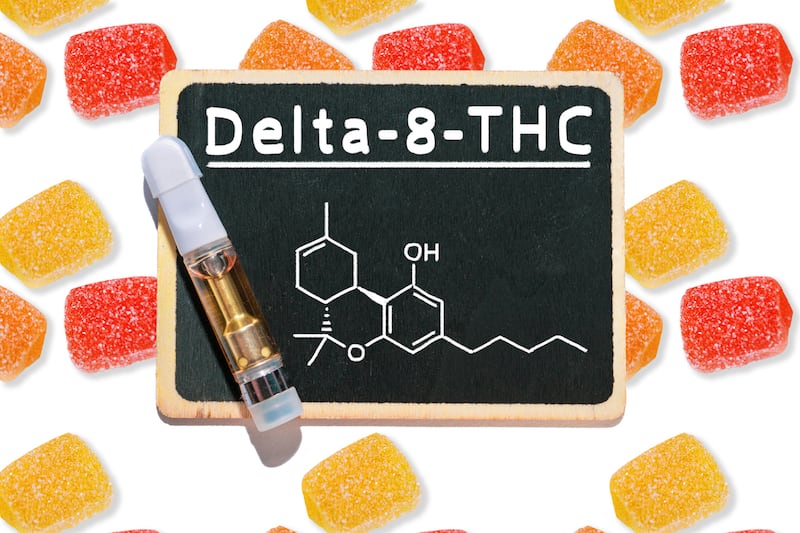
The village took action Monday and unanimously passed an ordinance banning the sale of the latest reincarnation of synthetic cannabinoids being sold as delta-8; kratom; and other laboratory-created synthetic drugs such as opioids, psychedelics/hallucinogens and stimulant products.
Delta-8 THC is a psychoactive compound in cannabis that produces effects similar to regular THC (delta-9) but generally milder, often described as “diet weed,” according to the Food and Drug Administration. It’s derived from hemp-based CBD but lacks FDA approval.
Similarly, kratom is a tropical tree that is native to Southeast Asia. Products prepared from kratom leaves are available in the U.S. online and in brick-and-mortar stores, according to a report by the FDA. The FDA has warned consumers not to use kratom because of the risk of serious adverse events, including liver toxicity, seizures and substance use disorder.
Swinford said he’s seen delta-8 being sold at a gas station on Route 50, and that is now banned in the village, effective immediately.
“They call it gas station heroin,” he said. “You can buy it legally in gas stations and smoke shops. City by city is starting to pass ordinances to start banning them, so this is to address that problem.”
Those locations soon will have to clear their counters of the synthetic cannabinoids or face fines ranging from $250 to $750 for each offense. The village will allow the stores some time to adhere to the new ordinance.
“How we carry that out, we’ll have to discuss that with the chief of police,” Village Administrator Chris LaRocque said. “We’ll send out letters, and then give them a time period to obviously remove the stuff from the shelves.”
:quality(70)/author-service-images-prod-us-east-1.publishing.aws.arc.pub/shawmedia/c3d8479b-c0c5-469a-9a64-224d14a26720.jpg)